

R&D Case Study
Technical Art Benchmarks
The bridge between creative vision and engine constraints. Our technical artists build the tools, shaders, and profiling pipelines necessary to push visual fidelity while maintaining strict framerate targets across various hardware.
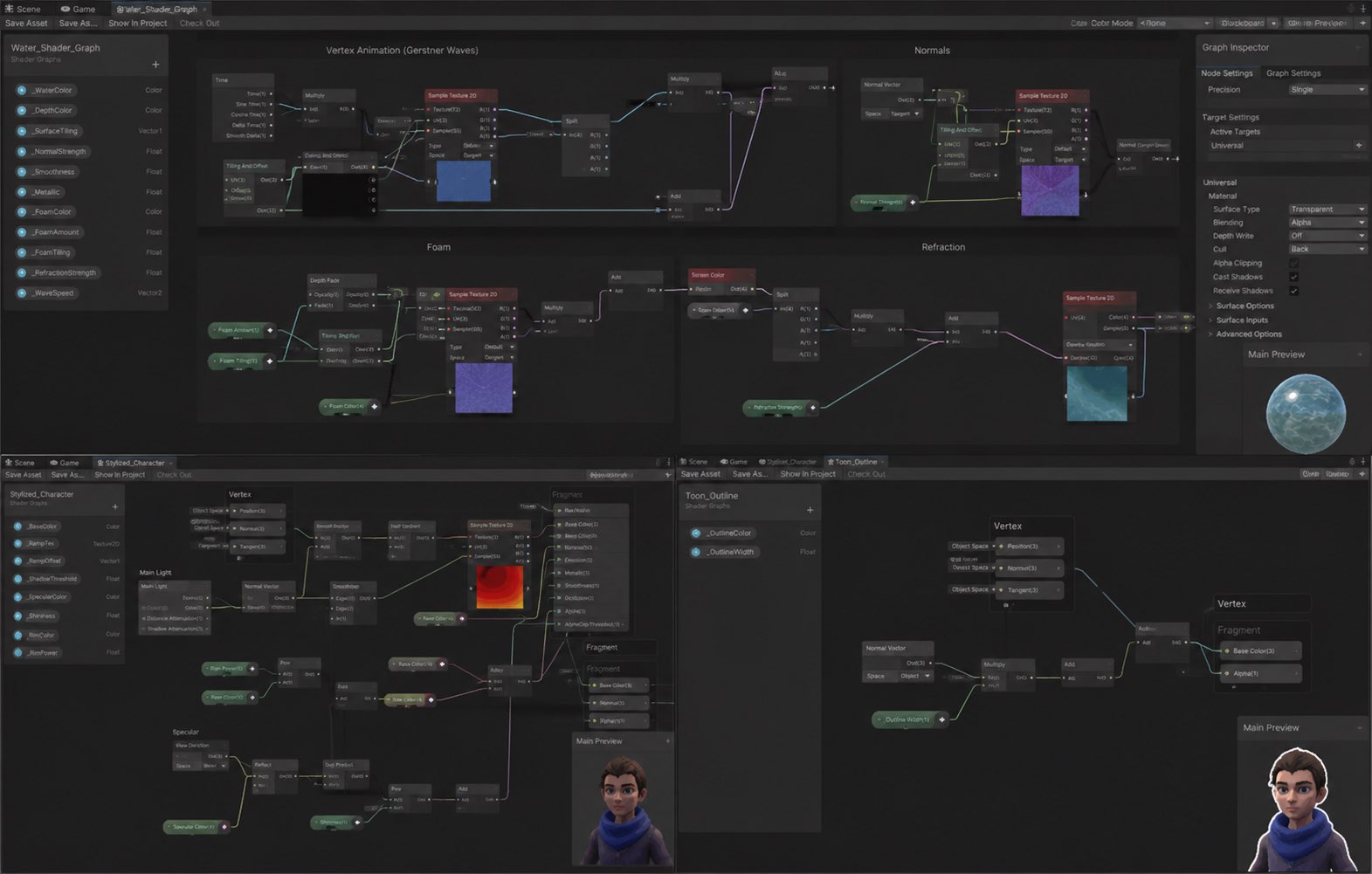
Shader Graphs & Material Setup
Custom node-based shader networks designed to handle complex surface responses—such as procedural weathering or energy shields—while minimizing expensive instruction counts and draw calls.
Performance Profiling
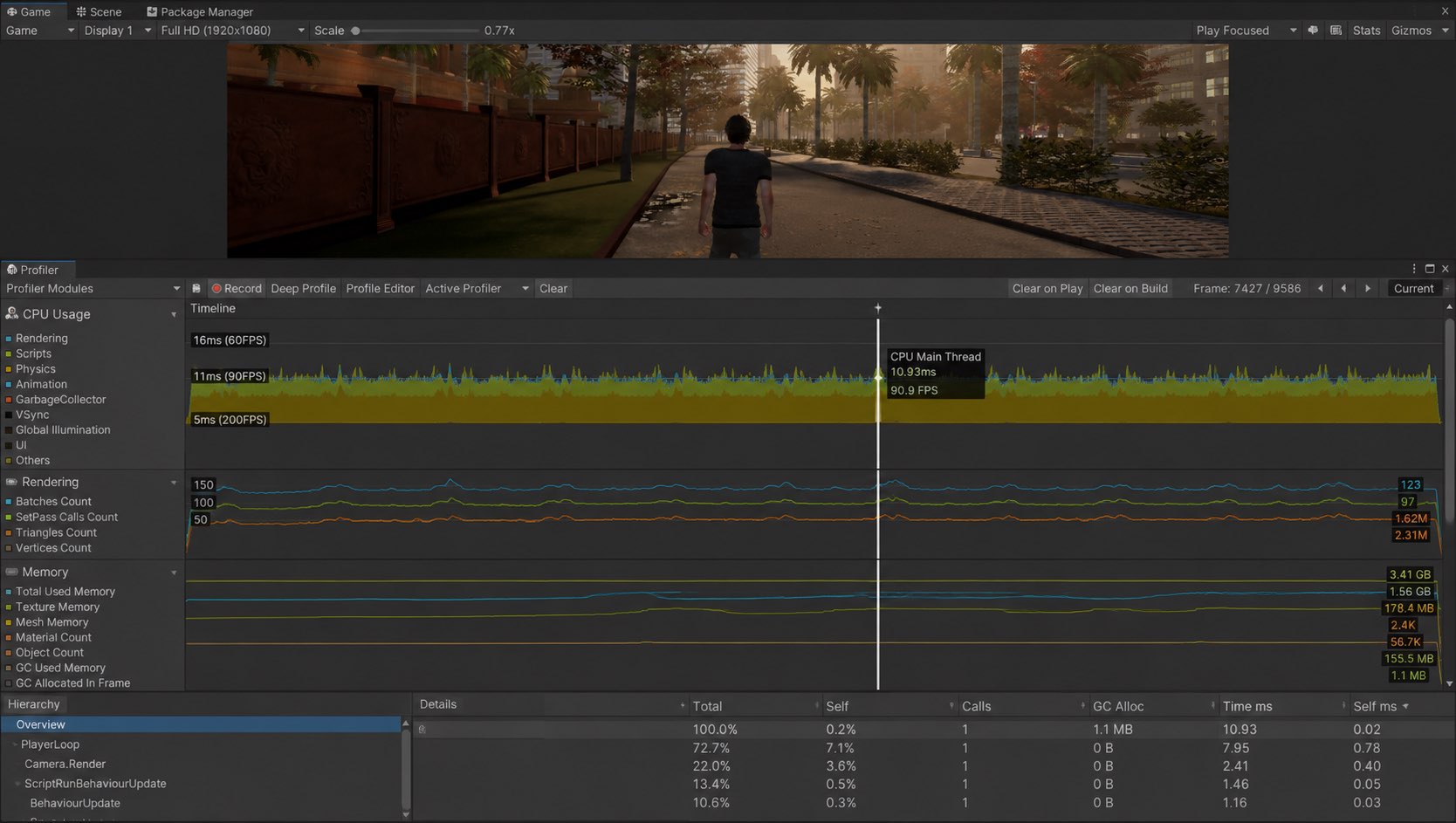
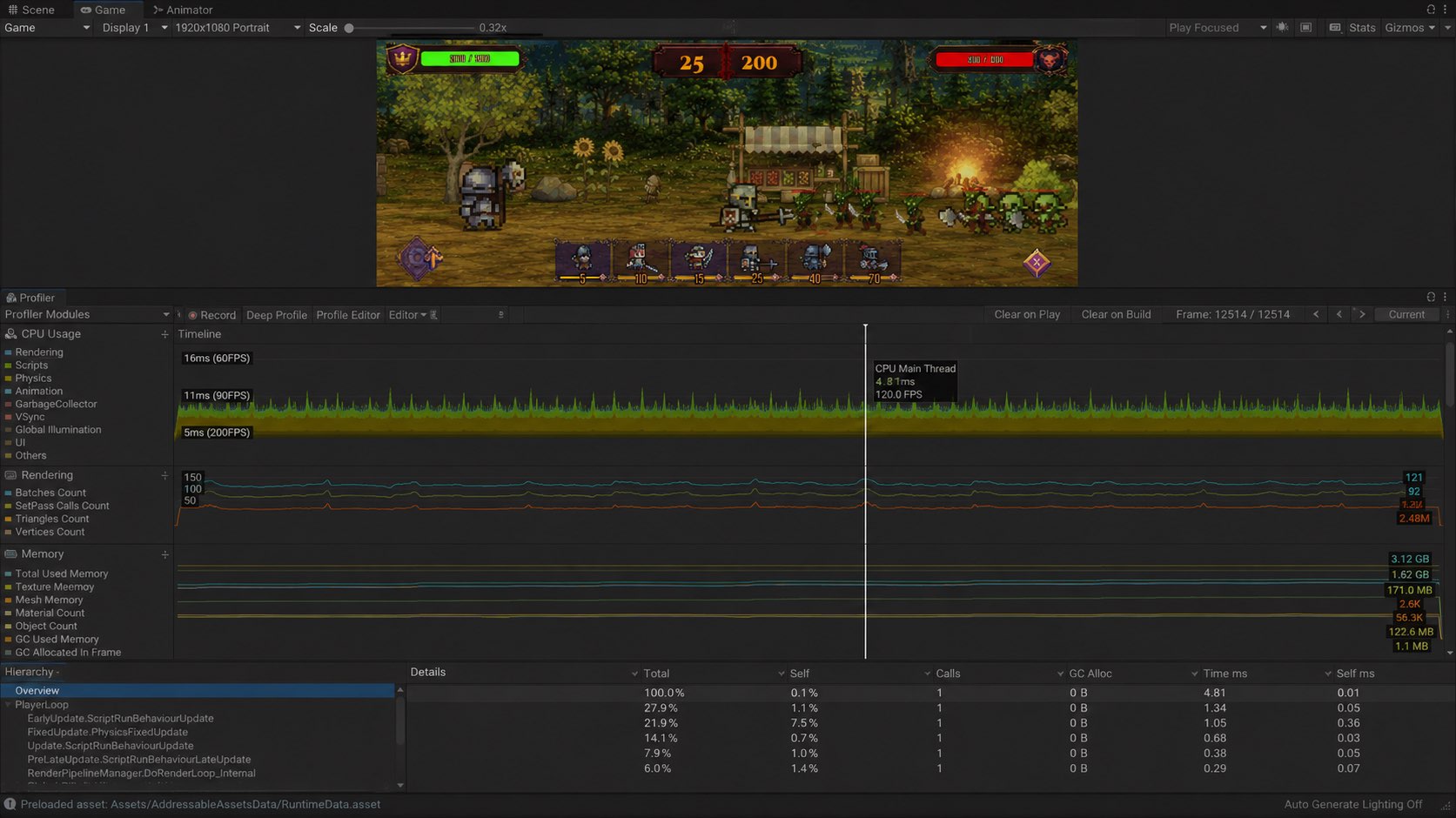
We rely on deep profiling and frame analysis to identify bottlenecks. By dissecting CPU/GPU timings and memory allocation, we optimize meshes and textures long before they impact the final build.
Rendering & Mesh Logic
These benchmarks generated internal libraries that accelerate asset baking, lighting projection, and terrain generation.
Bespoke Terrain Generator
Scripted custom terrain heightmaps to dynamic mesh loaders, replacing traditional terrain asset tools that degrade performance.
Custom Lighting Shader
Bypassed default Unity shaders to implement HLSL material structures that accurately react to lighting gradients while minimizing shader passes.
Vertex & Draw-Call Pruner
Strict runtime draw call profiling and mesh combining algorithms that maintain smooth framerates on low-tier targets.
Our Technical Art & Rendering Pipeline
Technical Art is the bridge that connects the creative vision of the art team with the rigid performance constraints of the programming team. At DualCore Games, our technical artists specialize in pushing graphical fidelity while strictly managing the performance budget. From writing custom shaders and rendering pipelines to developing procedural generation tools and complex particle systems, we ensure that the game looks breathtaking without dropping frames. We constantly profile CPU and GPU bottlenecks, optimizing draw calls, fill rates, and memory bandwidth across platforms.
Tools & Industry Standard Technologies
Our tech art stack is deeply integrated with real-time engines. We write raw HLSL/GLSL shader code and utilize node-based systems like Unity Shader Graph and Unreal Material Editor for rapid prototyping. For visual effects (VFX), we leverage Unity VFX Graph and Unreal Niagara to simulate complex particle behaviors driven by compute shaders. We also use RenderDoc and native engine profilers extensively to diagnose performance bottlenecks and optimize rendering paths.
Why Partner With Us?
Whether you are targeting high-end PC/Console or low-spec mobile and standalone VR (like Meta Quest), performance is paramount. We don't just troubleshoot problems; we build sustainable pipelines. We create custom editor tools to speed up artist workflows, establish strict asset validation rules, and optimize rendering configurations. By partnering with our technical art team, you ensure your project runs smoothly on its target hardware without compromising on its artistic vision.